.svg&w=384&q=75 "GoalGist logo")
Champions League 2026/27: A New Era and Unyielding Ambition
The scars from Budapest are still fresh. The medals were silver, the memories brutal: a Champions League final lost on penalties to Paris Saint-Germain. Yet as the dust settled, another truth cut through the disappointment – this is a club that has forced its way back among Europe’s elite and intends to stay there.
A first Premier League title since 2004 has done more than decorate the trophy cabinet. It has guaranteed a fourth consecutive season at Europe’s top table and a return to a competition that now looks very different from the old, familiar group-stage days.
The countdown to 2026/27 has already begun.
A New Era, Same Obsession
The Champions League no longer breaks neatly into groups of four. The 2025/26 campaign marked the second season of UEFA’s revamped “league phase” format, and that structure rolls straight into 2026/27.
- Thirty-six teams.
- One league table.
- Eight games each.
Every club plays eight different opponents – four at home, four away – in a sprawling schedule designed to pit giants against giants more often, while still leaving room for the climbers and dreamers.
The stakes are brutal. Finish in the top eight of the league, and you march straight into the knockout rounds. Land between ninth and 24th, and your European survival hangs on a two-legged play-off for a place in the last 16. Anything below that, and the campaign ends before the real drama even begins.
Last season, this team didn’t just survive the new format. It mastered it, finishing top of the league phase and winning all eight matches – a first in the competition’s new era. In a system built to test depth, nerve and consistency, that kind of perfection sends a message.
England, Spain Lead the Charge
The expanded 36-team field includes extra places for the nations whose clubs performed best in Europe the previous year. In 2024/25, that honour belonged to England and Spain, whose collective strength earned each league an additional Champions League spot.
The result? Five Premier League sides and five from La Liga will line up in next season’s edition.
From England, Liverpool, Manchester City, Manchester United and Aston Villa join the champions after finishing in the top five. Spain answers with Real Madrid, Barcelona, Atletico Madrid, Villarreal and Real Betis.
Italy and Germany each send four. Serie A’s contingent: Napoli, Inter Milan, AS Roma and Como. The Bundesliga supplies Bayern Munich, Borussia Dortmund, RB Leipzig and Stuttgart.
France’s three representatives include the defending European champions, Paris Saint-Germain, alongside Lens and Lille. The Netherlands provides Eredivisie winners PSV and runners-up Feyenoord, both safely into the league phase.
Portugal’s hopes rest with Porto and Sporting Lisbon. Galatasaray fly the flag for Turkiye, Slavia Prague for Czechia, Shakhtar for Ukraine and Club Brugge for Belgium – all of them domestic champions, all of them already assured of their place.
Seven more clubs will fight their way in through the qualifiers, which unfold over the summer. Five of those will emerge from the “champions path”, a gauntlet reserved for title winners from 42 different nations. The remaining two spots go to sides who finished second, third or fourth in their domestic leagues.
By August 26, the qualifiers will be over. A day later, on August 27, the draw will lock the league phase into place.
Pot 1, Targets Everywhere
The draw, though, is never a free-for-all. The rules matter, and for the champions, some of them bring welcome relief.
They cannot face another Premier League side in the league phase. So Liverpool, Manchester City, Manchester United and Aston Villa are off the board at this stage.
The 36 teams are split into four pots, based on UEFA club coefficients. Pot 1 is already a who’s who of European powerhouses – and this team is right there among them. The confirmed names in the top pot: Paris Saint-Germain, Bayern Munich, Real Madrid, Liverpool, Inter Milan, Manchester City, Barcelona, Atletico Madrid, and the English champions.
Pot 2 offers no respite. Borussia Dortmund, AS Roma, Sporting CP, Porto, Club Brugge, Real Betis, PSV Eindhoven, Aston Villa and Manchester United are all waiting there.
Pot 3 shapes up with Feyenoord, Lille, Napoli, RB Leipzig, Villarreal, Shakhtar Donetsk and Galatasaray. Pot 4 already includes Como and Lens, with Slavia Prague, Stuttgart and the seven qualifiers still to be assigned between the bottom two pots once the final rankings and results are confirmed.
The format is simple enough on paper: two opponents from each pot, one home, one away. No more than two teams from the same country can be drawn against you. In practice, it’s a gauntlet. There are no soft runs, no easy routes. Every draw line carries risk.
By the time the last qualifiers finish on August 26, all four pots will be set. Then comes the moment everyone circles in red.
Dates That Will Shape a Season
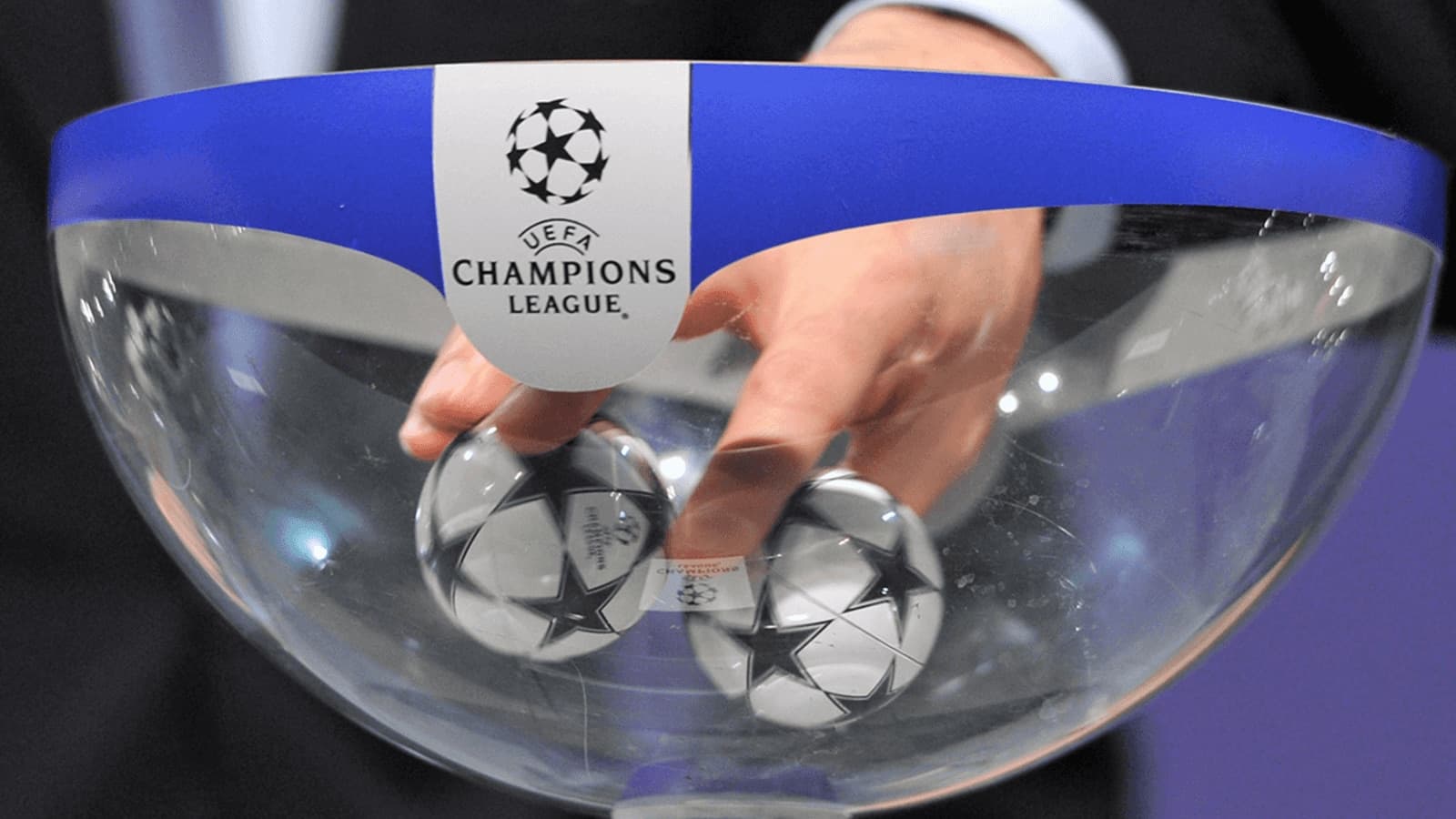
On Thursday, August 27, 2026, the Champions League draw will reveal the eight teams standing between the champions and another deep run in Europe.
The calendar after that looks relentless.
The league phase unfolds across eight matchdays:
- September 8–10
- October 13–14
- October 20–21
- November 3–4
- November 24–25
- December 8–9
- January 19–20
- January 27
When the dust settles on that schedule, the table will split. On January 29, 2027, UEFA will draw the knockout play-off ties for those finishing between ninth and 24th, with the two-legged clashes set for February 16–17 and February 23–24.
Then comes the decisive stroke of the pen. On February 26, 2026, the draw for the round of 16, quarter-finals, semi-finals and final will map out the road to the trophy in full.
The knockout rhythm is familiar, even if the path to it is not:
- Round of 16: March 9–10 and March 16–17
- Quarter-finals: April 6–7 and April 13–14
- Semi-finals: April 27–28 and May 4–5
And then, the destination every club in Europe is already dreaming of.
On Saturday, June 5, 2027, the Champions League final will be staged at the Wanda Metropolitano in Madrid. A stadium steeped in recent European drama, a city that understands what it means to host a season’s last, defining act.
Budapest hurt. Madrid beckons.
The question now is simple: having climbed back into the game’s inner circle, can this team turn near-miss heartbreak into a defining European crown?

