.svg&w=384&q=75 "GoalGist logo")
Beşiktaş Dominates Kauno Žalgiris 3–0 with Tactical Mastery
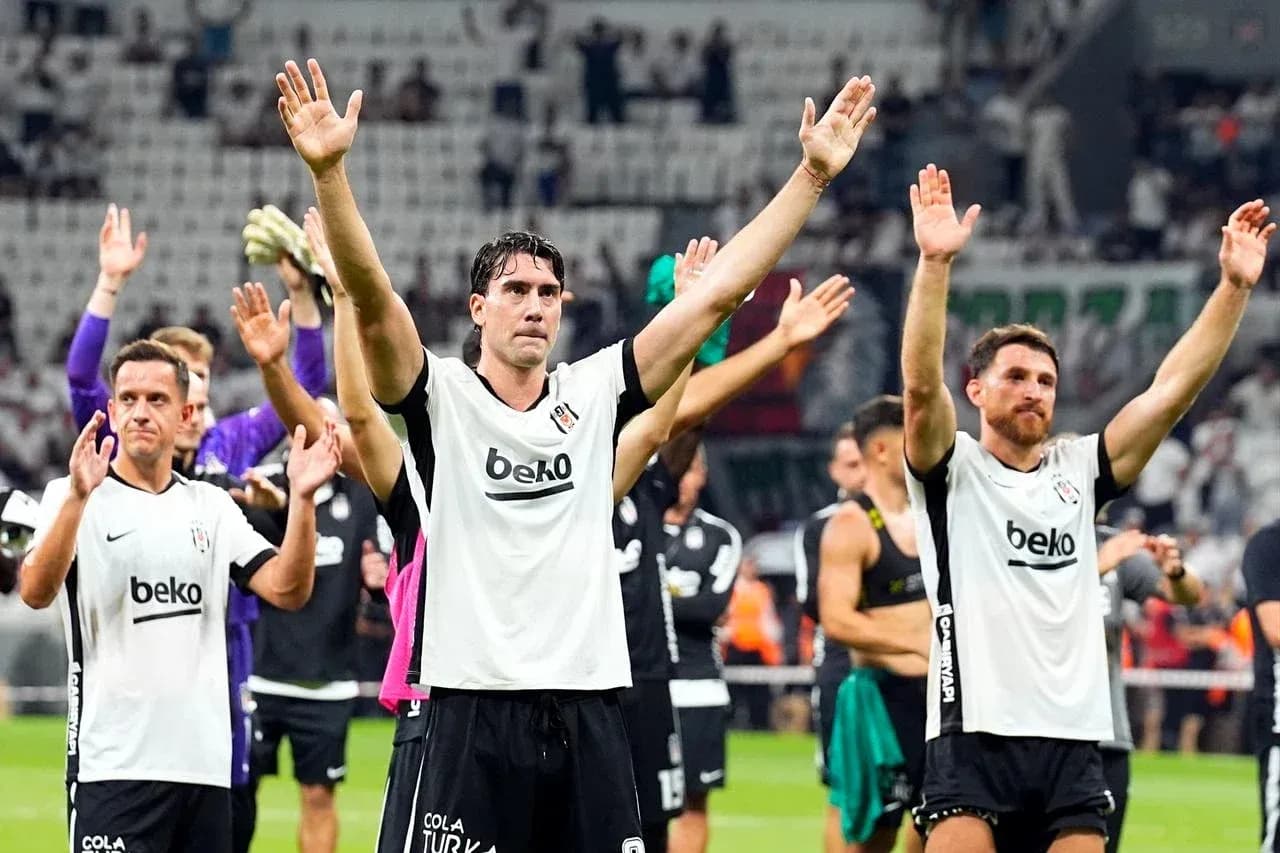
Beşiktaş’s 3–0 win over Kauno Žalgiris at Tüpraş Stadyumu was built on structural dominance and territorial suffocation rather than goalmouth drama. The 77% possession figure encapsulates a match in which Vincenzo Italiano’s 4‑1‑4‑1 pinned the visitors deep, forced them into a reactive 4‑2‑3‑1 block, and converted that control into a constant stream of final-third pressure: 6 shots on goal, 8 off target and a remarkable 15 corners against just 2 for Kauno Žalgiris.
In-possession, Beşiktaş’s shape behaved more like a 2‑3‑4‑1. The full-backs R. Yilmaz and E. Topcu pushed high and wide, with S. Ozcan anchoring in front of the centre-backs M. Murillo and T. Djalo to provide rest defence against counters. Ahead of him, the four-man line of V. Cerny, J. Olaitan, O. Kokcu and L. Trossard constantly rotated between half-spaces and wings, allowing Oh Hyeon-Gyu to stay high and threaten the back line. This structure explains both the volume of blocked shots (7) and corners: Beşiktaş were consistently working the ball into shooting zones, forcing Kauno Žalgiris to defend inside their own box.
Early Goals
The early goals reflected this territorial tilt. With Kauno Žalgiris trying to hold a compact 4‑2‑3‑1, Beşiktaş targeted the wide channels and cut-backs. The opener from Oh Hyeon-Gyu after 6 minutes and Murillo’s strike at 12 minutes both came with R. Yilmaz supplying the final pass, underlining how the left-back’s high positioning and delivery were central to the game plan. Those patterns pushed the Lithuanian side’s back four deeper, leaving their double pivot of V. Slivka and A. Kalik stretched and unable to step out to press Ozcan or Kokcu.
Defensive Dominance
Out of possession, Beşiktaş’s dominance meant they rarely had to defend in their own third. With Kauno Žalgiris registering 0 shots on goal and only 2 off target, the home side’s counter-press was clearly effective. The front five collapsed immediately on turnovers, with Ozcan screening central lanes and Murillo and Djalo holding an aggressive line near halfway. That high rest-defence line also explains the low foul count (3): Beşiktaş were usually winning the ball back via positioning and interceptions rather than last-ditch challenges.
Kauno Žalgiris, by contrast, were forced into a survival posture from the first minutes. Their nominal 4‑2‑3‑1 flattened into a 4‑5‑1 without the ball, with wide players L. Krekovic and A. Benchaib dropping to form a second line alongside Slivka, Kalik and F. Baldassarra. However, the lack of sustained possession (23% ball possession) meant they could not use this compactness to spring counters. G. Debeljuh was isolated up front, and the team’s inability to progress play is reflected in the fact they drew 15 corners against them while creating only 2 of their own.
Foul Count
The 16 fouls committed by Kauno Žalgiris versus just 3 by Beşiktaş highlight the physical cost of constant emergency defending. As Beşiktaş circulated the ball and attacked through both flanks, the visitors’ back four and double pivot were repeatedly forced into contact to halt combinations between Kokcu, Trossard and Oh Hyeon-Gyu. The four yellow cards for Kauno Žalgiris further underline how frequently their defensive structure was stressed and late to challenges, especially after Beşiktaş’s third goal from the penalty spot at 59 minutes gave the hosts even more licence to manage tempo.
Substitutions
Substitutions from Italiano were clearly oriented toward energy management and maintaining control rather than changing the game’s direction. The introduction of I. Fakili for V. Cerny at 46 minutes and later D. Vlahovic for Oh Hyeon-Gyu, M. Rashica for L. Trossard, A. Hadziahmetovic for J. Olaitan, and K. Ouattara for R. Yilmaz allowed Beşiktaş to preserve their pressing intensity and wide threat while resting key starters. Crucially, the structure — a single pivot behind a fluid line of four — remained intact, so there was no tactical destabilisation even as personnel rotated.
For Kauno Žalgiris, the changes were more reactive. Bringing on L. Kastrati for J. Moutachy and M. Burba for G. Debeljuh right after half-time, followed by Renan Oliveira for A. Kalik, F. Ourega for L. Krekovic and I. Fiolić for A. Benchaib, suggested an attempt to add ball-carrying and creativity between the lines. Yet the underlying problem — Beşiktaş’s superior pressing structure and numbers around the ball — meant these adjustments had minimal effect on the shot profile: the visitors never managed to test the goalkeeper with a shot on goal.
Statistical Contrast
The statistical contrast is stark and tactically coherent. Beşiktaş’s 6 shots on goal, 8 off goal and 7 blocked efforts show a side living in the attacking third, constantly generating shooting situations even if not all were high quality. Their 15 corners reflect repeated penetration into wide and half-space channels, while only 1 offside indicates well-timed runs and good coordination between the forward line and Kokcu as the primary connector. Kauno Žalgiris’s 0 shots on goal and 2 off goal tell the story of a team unable to escape pressure or construct meaningful attacks.
Discipline and control metrics align with this picture. Beşiktaş’s single yellow card against 4 for Kauno Žalgiris, combined with the 3–16 foul split, underline that the hosts dictated rhythm and contact zones. With no data on passes or xG, the possession and shot figures still allow a clear reading: Beşiktaş used a stable positional framework to compress the game into the visitors’ half, while Kauno Žalgiris’s 4‑2‑3‑1 never evolved beyond a deep defensive shell. The 3–0 scoreline, the shot disparity and the corner count all converge on the same conclusion — this was a tactically one-sided contest decided by structure, field position and controlled aggression.