.svg&w=384&q=75 "GoalGist logo")
Barcelona's Title Defense: The Striker Dilemma
Barcelona have spent the summer loading up everywhere on the pitch – except in the one place that usually decides titles.
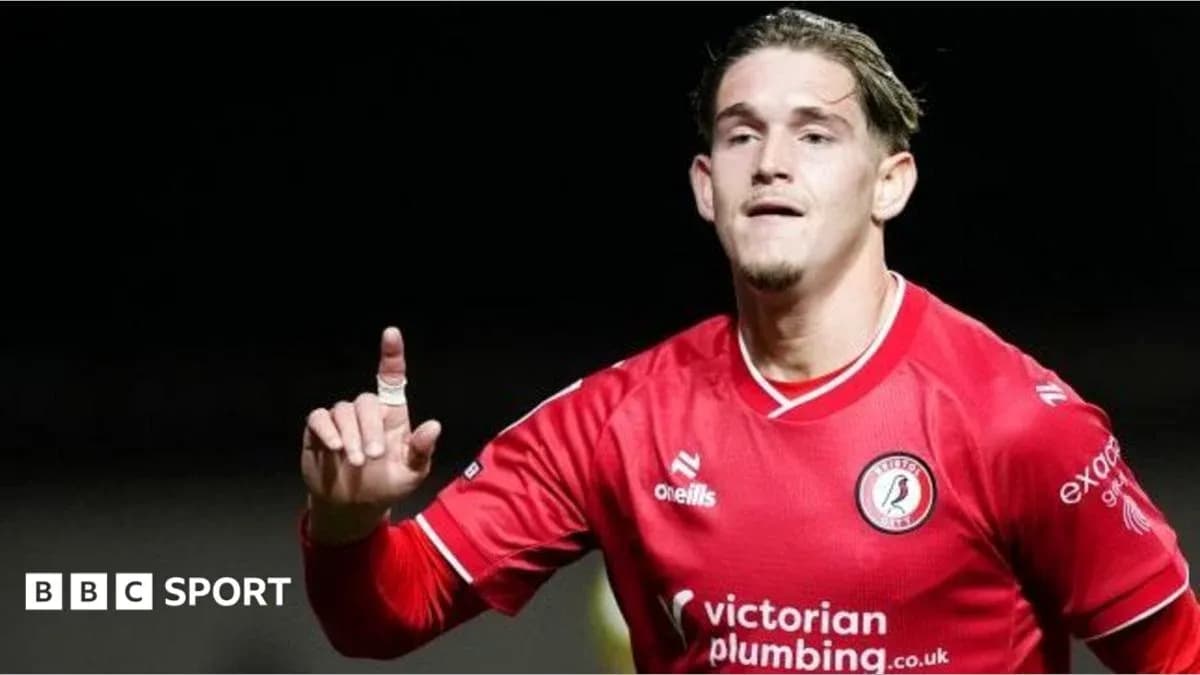
The Spanish champions have added a Ballon d'Or winner and World Cup-winning captain in Rodri, prised from Manchester City to anchor and elevate a midfield already dripping with talent. They have injected raw speed and width into the attack with Anthony Gordon and Karim Adeyemi, while 18-year-old Belgian winger Jesse Bisiwu has arrived as a bet on the future.
On paper, it looks like a complete rebuild. Until you look at the number nine.
A supercharged squad, with a glaring hole
Hansi Flick takes his Barcelona side to Elche on Sunday, 23 August, for their La Liga opener knowing he may be about to start an entire season without a recognised centre-forward. Unless a striker walks through the door before the window closes on 1 September, this will be a title defence built without a traditional spearhead.
Robert Lewandowski, 37, has gone, his contract expiring and his goals bound for Chicago Fire in Major League Soccer. Ferran Torres has followed him out, joining Paris St-Germain for about 50m euros (£42.7m) after a season in which he struck 21 goals in 49 appearances and often filled in as the central option when Lewandowski was rested or rotated.
Two senior forwards out. No senior striker in. For a club of Barcelona’s size, that is not a minor detail; it is a structural question.
The Alvarez obsession
Inside the club, the answer is clear: they want Julian Alvarez from Atletico Madrid.
The 26-year-old Argentina international signalled during the World Cup that he would be open to a move. Barcelona were listening. So were Real Madrid. The response from Atletico was immediate and uncompromising.
Chief executive Miguel Angel Gil Marin stated the club would not sell Alvarez – not even for 200m euros (£170.8m). That was not a negotiation stance. It was a line in the sand.
So Barcelona wait. They push. They hope. But they plan, too, because Flick knows he cannot simply cross his fingers and hope the market breaks his way.
"We know we have to do something," the German coach said this month, before pointing not to the transfer market but to his own dressing room.
Lamine Yamal at the centre of everything
The most obvious internal solution is also the youngest.
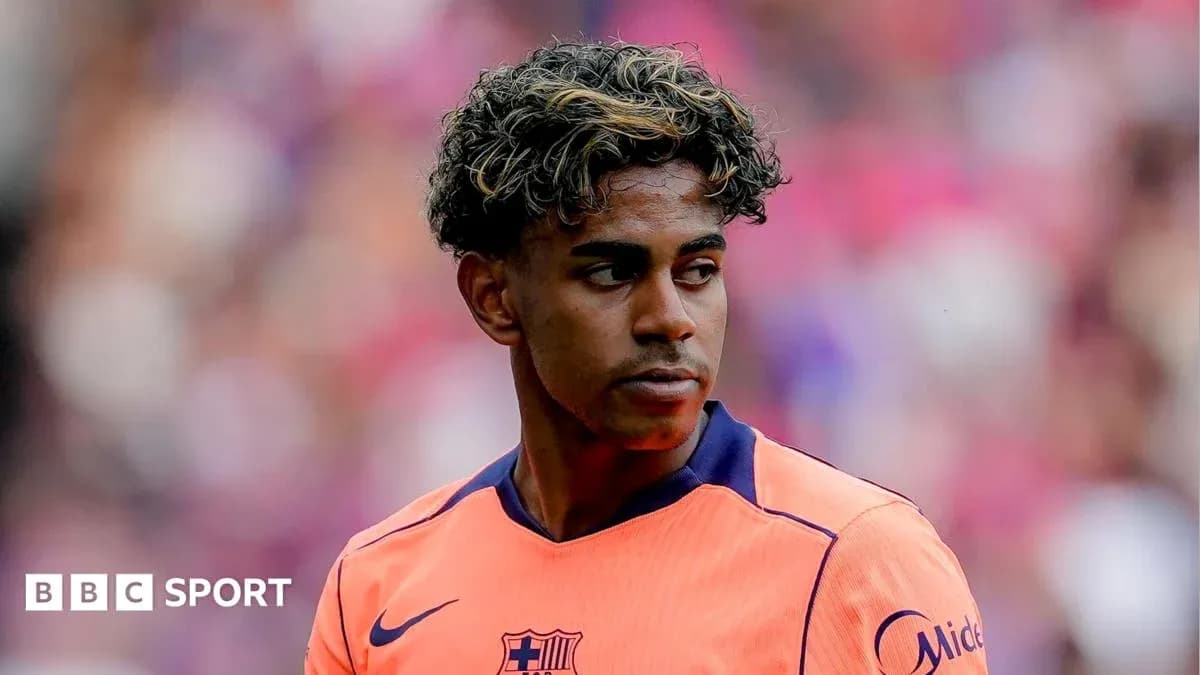
Teenager Lamine Yamal has already become the focal point of Barcelona’s attack and is coming off a staggering season in which he scored 24 goals and lifted the World Cup with Spain. He can play as a false nine. He can drag centre-backs into places they do not want to go. He can finish.
Yet his deadliest weapon remains his work from the right: isolating a full-back, cutting inside, and conjuring chances from angles that should not exist. Flick’s own preference is to leave him there, terrorising defenders from the wing rather than shackling him centrally.
That is the tactical dilemma. Make Lamine the nine and you solve one problem but blunt his greatest strength. Keep him wide and the search for a central reference point continues.
False nines and fluid lines
Flick does have other options for a striker-less system.
Dani Olmo can operate as a false nine, knitting play and dropping between the lines. Raphinha has been used centrally by Flick as well, offering a more direct, vertical threat. Fermin Lopez is another candidate in advanced areas and has said he is comfortable playing as a false nine if required.
Gordon and Adeyemi bring blistering pace and direct running. They can stretch defences, press high, and attack space, but neither fits the mould of a classic penalty-box predator who lives between the posts.
So one route is obvious: lean fully into a fluid front line. No fixed striker. Constant rotation. Wingers darting inside, midfielders arriving late, defenders never sure who to pick up or where to stand. On the right day, with this level of technical quality, that could make Barcelona almost impossible to man-mark.
On the wrong day, when the game turns scrappy and space tightens, the absence of a pure finisher could be exactly what costs them.
A choice that will shape the season
Everyone inside the club knows the preferred outcome. They want a specialised striker who fits the profile, a player who can finish moves, occupy centre-backs and still link the intricate patterns that define Barcelona’s game.
Until that happens – if it happens at all – Flick will walk a fine line between tactical innovation and calculated risk.
Barcelona have strengthened almost everywhere. The question that hangs over their title defence is brutally simple: can a team with this much talent afford to go into a season without a true number nine?