.svg&w=384&q=75 "GoalGist logo")
Australia Strengthens Pacific Security Amid Domestic Challenges
Anthony Albanese has moved to shore up Australia’s security footprint in the Pacific while firefighting a domestic political flare-up, as regional tensions and culture-war skirmishes collided on a brisk Canberra Monday.
Missile tests and a sharper tone on Beijing
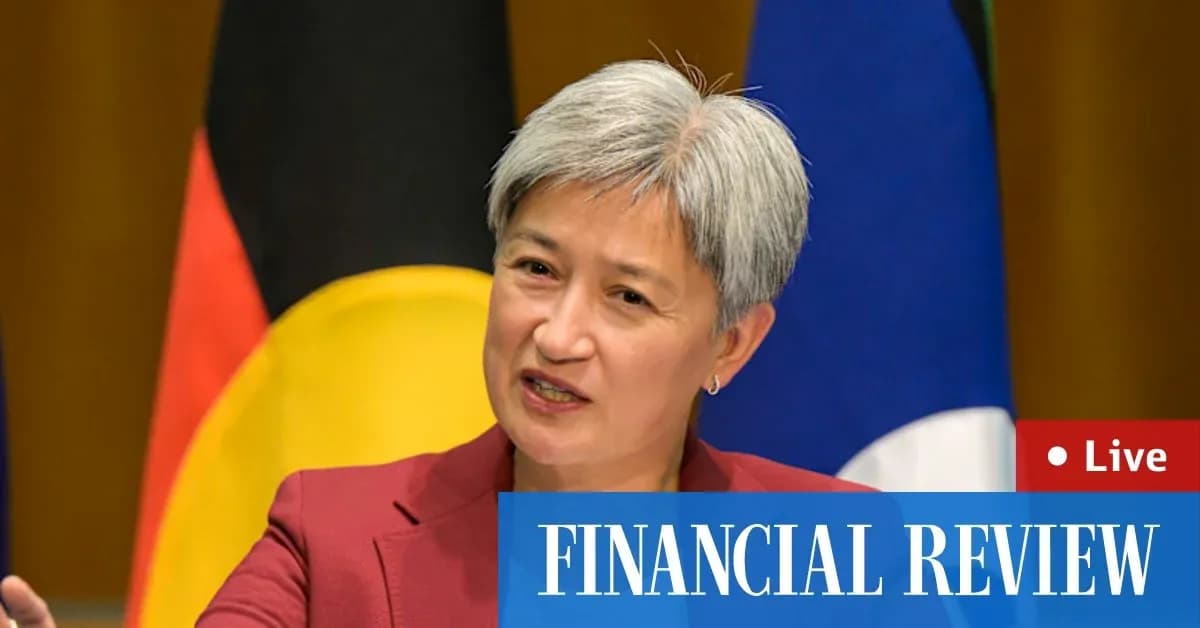
Foreign Minister Penny Wong confirmed that China has notified Canberra of plans to conduct a sea‑based missile test into the Pacific, a development that again drags regional security concerns to the surface.
Wong did not mince words. She accused Beijing of destabilising the region, a pointed rebuke that underscores how quickly the strategic temperature is rising in Australia’s near neighbourhood. The notification may have followed protocol, but the message from Canberra was clear: Australia is watching, and it is not impressed.
With Pacific nations already juggling climate threats, economic pressures and great‑power courtship, the prospect of missile tests in surrounding waters adds another layer of unease.
A new defence pact with Fiji
Against that backdrop, Anthony Albanese inked a fresh mutual defence treaty with Fiji, tightening Australia’s security embrace in the Pacific.
The deal lifts the relationship to a level approaching Australia’s long‑standing mutual defence pact with Papua New Guinea. It signals that Suva now sits near the top tier of Canberra’s regional defence partners, a shift that speaks to both trust and urgency.
For Australia, it’s a double play: reassure a key neighbour while pushing back, quietly but firmly, against China’s growing reach across the islands. For Fiji, it offers a powerful security backstop at a time when the Pacific is being dragged into the centre of global strategic competition.
Podcast misstep and a public apology
While the prime minister was signing defence documents abroad, a domestic distraction followed him.
Albanese apologised for comments he made during a light‑hearted “shag, marry, or date” game on a podcast, where remarks involving Kylie Minogue triggered a backlash. What might have been dismissed as off‑the‑cuff banter instead spilled into the political arena.
One Nation MP Barnaby Joyce called the comments “a little bit below him”, tapping into a familiar line of attack on prime ministerial judgment. The episode shows how quickly modern political leaders can be dragged from high diplomacy to damage control over a few seconds of audio.
Awer Mabil hits back at Hanson’s monocultural call
Away from Parliament, the culture wars found their way back onto the pitch.
Socceroo Awer Mabil criticised Pauline Hanson’s call for Australia to become a monocultural society, rejecting her vision and brushing off her remarks about the national team during their World Cup campaign.
Mabil made it clear the comments did not distract the squad on the world stage, but he pushed back on the broader idea that Australia should narrow its identity. From a player who has become a symbol of the game’s diversity, the response carried weight well beyond football.
Hanson, Farage and a hard‑right huddle
Joyce also flagged that Pauline Hanson plans to compare notes with Reform UK leader Nigel Farage when the pair meet on the sidelines of a conservative political action conference.
It is a meeting that links Australian right‑wing populism with its British cousin, a cross‑continental conversation about immigration, culture and sovereignty that has shaped politics in both countries. Any alignment of messaging from that encounter will ripple back into local debates.
AI, unions and the next Labor platform
On the economic front, the next fight is already forming.
Deputy Liberal leader Jane Hume warned that Labor’s draft policy platform for 2026 would effectively hand unions a veto over the regulation of artificial intelligence. Her claim goes to the heart of a looming contest over who controls the rules of the digital economy: elected governments, independent regulators, or organised labour.
With AI racing ahead of legislation and workplaces changing by the month, the question is no longer whether regulation is coming, but who gets to write the first draft.
Missile tests in the Pacific, new defence pacts, culture clashes on and off the field, and a brewing battle over AI: Australia’s next political season is already loaded. The only uncertainty is which front will erupt first.