.svg&w=384&q=75 "GoalGist logo")
Andrea Pirlo Withdraws from Italy National Team Coach Contention
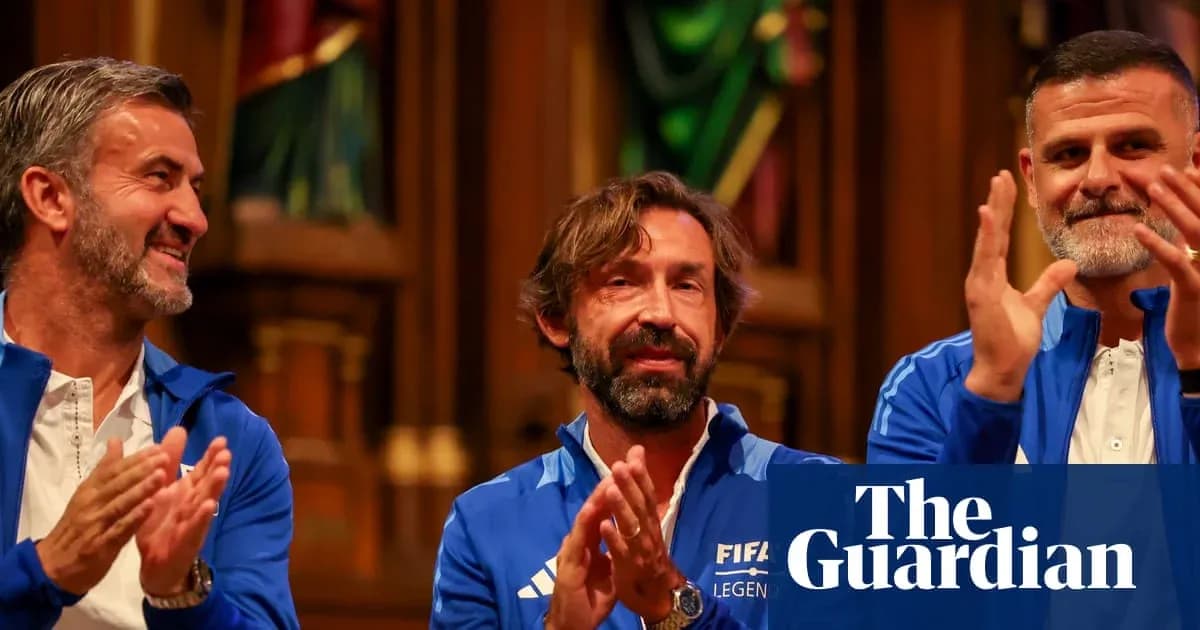
Andrea Pirlo’s path to the Italy job has closed almost as quickly as it opened, and not because of tactics, results or dressing-room politics. A sponsorship deal has done what no defence ever quite managed in his playing days: it stopped him in his tracks.
The former Azzurri playmaker confirmed on Instagram that he is no longer in contention to become national team coach. “I heard last night that I’m no longer the candidate for the Italy national team job,” he wrote, drawing a line under a candidacy that had already ignited a fierce political storm.
At the heart of the row lies Pirlo’s role as an ambassador for Fonbet, a Russian betting company. Several Italian politicians argued that the man leading the national side cannot be commercially tied to a Russian brand at a time when Italy backs Ukraine in the war with Russia. What began as a sponsorship agreement suddenly became a litmus test of ethics and geopolitics.
Pirlo has tried to separate the two worlds. He has repeatedly stressed that the Fonbet partnership stems from his work in the United Arab Emirates and is, in his words, “exclusively for commercial and sports purposes”. He rejected any suggestion that the deal carries political weight, saying that to do so means “attributing beliefs to me that I have never expressed and don’t belong to me.”
That distinction cut little ice in Rome. The backlash grew quickly and loudly, even as Paolo Maldini, the newly appointed technical director of the Italian football federation, backed Pirlo’s candidacy. For Maldini, Pirlo represented a bold, modern choice. For many politicians, he symbolised the opposite.
Pina Picierno, vice-president of the European Parliament, captured the anger on social media. “After yet another defeat and another missed World Cup qualification, Italian football desperately needed a cultural, ethical and managerial revolution. The choice of Andrea Pirlo goes in the exact opposite direction,” she wrote, framing the debate as a question of values rather than footballing philosophy.
The criticism did not stop there. Ignazio La Russa, president of the Senate and a leading figure in prime minister Giorgia Meloni’s party, voiced serious reservations about Pirlo’s coaching credentials as well as the wider context. Speaking to Ansa, he said: “I am speaking only because you called me: God help us. Of course I am an Italy fan and Pirlo was a great champion, but as a coach, it is a leap in the dark.”
Carlo Calenda, leader of the Azione party, took an even harder line, linking the Fonbet association directly to national responsibility. “Anyone who is or has been promoting Russia after 2022 should not hold national office,” he declared, turning the national team bench into a de facto public office in the eyes of his supporters.
Inside the FIGC, the search for a new commissario tecnico has already been fraught. The federation initially aimed for the very top of the coaching pyramid, sounding out Pep Guardiola and Carlo Ancelotti as primary targets to replace Gennaro Gattuso. Both remained out of reach. Gattuso had departed by mutual consent in April, after Italy failed to qualify for a third consecutive World Cup, a staggering fall for a four-time world champion.
With the dream appointments slipping away, attention swung to Pirlo, who was ready to walk away from his role at Dubai United for the chance to lead his country. His profile, glittering as a player but still debated as a coach, divided opinion even before politics entered the conversation. Once the Fonbet link came under the spotlight, his candidacy became untenable.
Now, with Pirlo out of the frame, the debate circles back to more familiar names. Roberto Mancini and Antonio Conte, both former Italy coaches, are again being discussed as potential solutions to a crisis that runs far deeper than the technical area.
Italy wanted a clean break and a fresh era. Instead, it finds itself reaching back into its recent past, searching for a figure who can calm a federation in turmoil, unite a divided political class, and somehow drag the Azzurri back to the World Cup stage.